Pilot Training Flight Simulator Mobile: Mastering the Skies
Master Pilot Training Flight Simulator mobile controls with our guide. Learn takeoff, landing, and aircraft handling for the best Roblox flight experience.
Published:
Video Guide
How to fly at Pilot Training Flight Simulator In Mobile (Roblox)Table of Contents
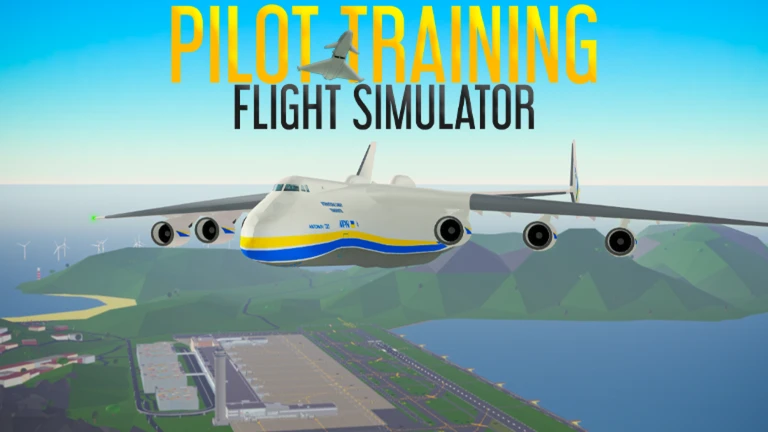
Taking to the virtual skies has never been more accessible than it is today. Whether you are a seasoned aviator or a curious newcomer, pilot training flight simulator mobile gameplay offers an incredibly deep and rewarding experience right on your smartphone or tablet. As one of the most enduring and detailed flight simulations on the Roblox platform, this experience allows you to pilot everything from the massive Antonov An-225 to the humble Piper Cub.
Mastering the nuances of pilot training flight simulator mobile requires more than just pushing buttons; it demands an understanding of physics, interface management, and spatial awareness. In this comprehensive guide, we will break down the essential controls, provide expert tips for mobile-specific maneuvers, and help you navigate the massive world created by the Pilot Training Club.
Getting Started with PTFS on Mobile Devices
The first hurdle many players face is transitioning from the precision of a PC mouse and keyboard to the touch-based interface of a mobile device. However, the developer, Orange12345, has spent years refining the UI to ensure that mobile pilots are not at a disadvantage. When you first load into the game, you are greeted with a vast map and an overwhelming list of aircraft.
To ensure the best experience, players should first check their settings. High-fidelity flight models can be taxing on older mobile hardware. According to community reports, lowering your Roblox graphics quality to level 3 or 4 can significantly reduce input lag, which is crucial during the high-stakes moments of a short-runway landing.
System Requirements and Optimization
Feature
Recommended Specification
Reason
RAM
4GB+
Prevents crashes during asset loading of large planes.
Connection
Stable Wi-Fi / 5G
Reduces "rubber-banding" during formation flights.
Screen Size
6 inches or larger
Essential for interacting with small cockpit buttons.
Graphics
Level 3-5 (Roblox Settings)
Balances visual clarity with frame rate stability.
Mastering the Mobile Control Interface
The pilot training flight simulator mobile interface is designed to be intuitive but has several layers of depth. Unlike the PC version, where many functions are mapped to the keyboard, the mobile version utilizes a series of on-screen buttons and a virtual joystick.
Throttle and Pitch Management
On mobile, the throttle is typically a slider located on the left or right side of the screen. Managing your speed is the most critical aspect of flight. A common mistake among new mobile pilots is keeping the throttle at 100% at all times. This leads to "overshooting" runways and making the aircraft difficult to turn.
The 50% Rule
When performing sharp turns or preparing for an approach, pull your throttle back to 50-60%. This increases your maneuverability and gives you more time to react to the environment.
Landing Gear and Flaps
These are toggled via specific icons on the screen. On mobile, it is easy to accidentally tap these buttons. Always double-check your gear status before touchdown. Community experience suggests that deploying flaps early on mobile helps stabilize the plane’s pitch, making the touch-screen "joystick" feel less twitchy.
Essential Mobile Flight Controls Reference
To help you get off the ground quickly, refer to this table of primary controls for the pilot training flight simulator mobile version:
Action
Mobile Input
Pro Tip
Engine Start
"Engine" Button
Wait for the RPM to stabilize before taxiing.
Steering (Taxi)
Virtual Joystick (Left/Right)
Use small movements to avoid spinning out.
Takeoff
Throttle Up + Pull Back Joystick
Rotate at the specific V-speed for your aircraft.
Flaps
"Flaps" Toggle
Use Stage 1 for takeoff and Stage 3 for landing.
Landing Gear
"Gear" Toggle
Retract immediately after "Positive Rate" is achieved.
Camera View
Swipe Screen
Use the "Free Cam" to check your surroundings.
Choosing the Right Aircraft for Mobile
With over 96 aircraft available, choosing the right one can be daunting. Some planes are significantly easier to handle on a touch screen than others. Larger commercial jets like the Boeing 747 or the Airbus A380 offer more stability and are more forgiving of small, accidental inputs. Conversely, high-speed military jets like the F-14 Tomcat or the SR-71 Blackbird require much higher precision.
Top Aircraft Recommendations for Beginners
Piper Cub: The ultimate trainer. It flies slowly, allowing you to get used to the touch controls without the risk of a high-speed crash.
Cessna 172: A step up in complexity, featuring a more detailed cockpit and better instrumentation.
Boeing 737: The best entry point for commercial aviation. Its handling is balanced and the mobile UI for its systems is very clean.
Antonov An-225: While massive, its slow response time actually makes it easier for mobile users to control, as it doesn't react violently to small thumb slips.
Quick Answer
For the best mobile experience, start with slow-moving propeller planes. High-speed jets require a level of precision that can be difficult to achieve without significant practice on a touch interface.
Advanced Maneuvers on Mobile
Once you have mastered the basics of pilot training flight simulator mobile, you can begin exploring advanced maneuvers. This includes short-field takeoffs, crosswind landings, and even carrier operations if you have the appropriate gamepasses.
The Art of the Landing
Landing on mobile is often cited as the hardest skill to master. The lack of tactile feedback from a physical joystick means you must rely entirely on visual cues.
Steps for a Perfect Mobile Landing:
Alignment: Align with the runway at least 5 miles out. Use the "Follow" camera to ensure your tail is straight.
Speed Control: Reduce throttle to roughly 30-40% depending on the aircraft weight.
Descent: Use very slight downward pressure on the virtual joystick. Avoid "porpoising" (bouncing up and down).
Flare: Just before the wheels touch the tarmac, pull back slightly on the joystick to raise the nose. This ensures the rear wheels touch first.
Braking: Once all wheels are down, cut the throttle to 0% and hold the brake button.
Navigating the Map
The PTFS map is massive, featuring numerous islands and airports such as Greater Rockford, Perth International, and the Oil Rig. Using the in-game map is essential. On mobile, you can toggle the map overlay to see your current position. This is vital for long-haul flights where you might be flying over open ocean for several minutes.
Troubleshooting Common Mobile Issues
Playing a complex simulation like this on a mobile device can occasionally lead to technical hurdles. Based on player experience shared in community forums, here are the most common issues and their fixes.
Issue
Potential Cause
Solution
UI Buttons Disappearing
Screen Resolution Glitch
Rejoin the server or toggle "Full Screen" in Roblox settings.
Plane Pulling to One Side
Calibration / Joystick Drift
Ensure your screen is clean and recalibrate the joystick by letting go.
High Latency / Lag
Server Load or Hardware
Switch to a private server or lower the "Render Distance."
Cannot Interact with Buttons
UI Scaling Issue
Adjust the "Roblox Menu" scale in the main app settings.
The Social and Roleplay Aspect
One of the reasons pilot training flight simulator mobile remains so popular is the community. Many players engage in organized Air Traffic Control (ATC) roleplays. On mobile, typing in the chat while flying can be dangerous.
Don't Text and Fly
If you need to communicate with ATC or other pilots, ensure your aircraft is on "Autopilot" or at a safe cruising altitude. Attempting to type while on a landing approach almost always ends in a collision.
The game also features various badges and secrets, such as "Find the Monkey" or "Visit the Lighthouse." Exploring these landmarks is a great way to practice your low-altitude flying and precision landing skills. You can find more information about the game and its community on the official Roblox page.
Evolution of the Game: Recent Updates
The Pilot Training Club is constantly updating the experience. Recent updates have introduced console support, new islands like Bird Island, and highly requested aircraft like the DC-10 and the Lockheed Tristar. For mobile users, these updates often include "quality of life" improvements, such as better button placement and optimized textures that load faster on mobile data.
Keeping an eye on the change log is important for any serious pilot. New aircraft often have different flight characteristics; for example, the recent update to the Airbus A330 and A340 models changed their weight distribution, requiring mobile pilots to adjust their takeoff rotation speeds.
Frequently Asked Questions (FAQ)
Can I play Pilot Training Flight Simulator on both Android and iOS?
Yes, pilot training flight simulator mobile is fully compatible with both Android and iOS devices through the Roblox app. The experience is optimized to detect your device type and provide the appropriate touch-screen interface.
How do I fix lag when flying large planes on mobile?
Lag is often caused by the high number of parts in large aircraft models. To improve performance, go into the Roblox settings and manually set your graphics quality to a lower level. Additionally, closing background apps on your phone can free up necessary RAM.
Are there mobile-exclusive features in PTFS?
While the core gameplay is identical to the PC version, the mobile version features a unique UI layout designed for thumb navigation. Some players find the "tilt-to-steer" options (if enabled in Roblox settings) to provide a more immersive feel than a mouse.
Is a gamepass required to enjoy the game on mobile?
No, the base game is free-to-play and includes dozens of aircraft. However, certain high-performance jets (like the F-22 Raptor) and specialized roles (like ATC) are locked behind gamepasses. These are a one-time purchase and carry over across all platforms.
Conclusion
Mastering pilot training flight simulator mobile is a journey of patience and practice. By understanding the UI, choosing the right aircraft for your skill level, and following the flight procedures outlined above, you can enjoy one of the best flight sims ever created for a mobile platform. Whether you are performing a routine cargo run or executing a daring rescue mission in a Chinook, the sky is truly the limit. Remember to keep your eyes on the horizon, watch your airspeed, and most importantly, enjoy the view from the cockpit!