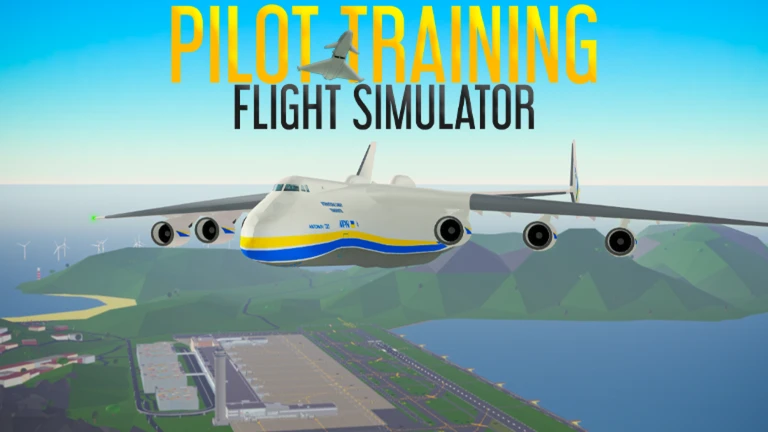
Pilot Training Flight Simulator: Master Your Flight Skills
Discover how to excel in Pilot Training Flight Simulator with our expert guide. Learn aircraft controls, landing techniques, and essential flight tips.
Published:
Table of Contents
Flying in the virtual skies of Roblox has never been more immersive than in Pilot Training Flight Simulator. Whether you are a novice pilot looking to take your first flight or a veteran aiming to master complex maneuvers, understanding the nuances of this platform is the key to success.
If you are wondering how to improve your performance, you have come to the right place. In this comprehensive guide, we will explore everything you need to know about Pilot Training Flight Simulator, from basic engine startup procedures to advanced landing techniques that will impress your friends.
Getting Started: The Basics of Flight
Before you take to the skies, it is essential to understand the interface and the controls that make Pilot Training Flight Simulator such a realistic experience. The game offers a massive selection of aircraft, ranging from small, agile planes to massive commercial airliners.
Mastering Basic Controls
Always remember to press 'E' to start your engine before attempting to throttle up. Using 'W' and 'S' to manage your speed is crucial for maintaining a stable flight path.
To help you get comfortable, here is a quick reference table for the most common keyboard commands used in the game:
Action
Keyboard Key
Start Engine
E
Increase Throttle
W
Decrease Throttle
S
Landing Gear
G
Pushback
P
Change Camera
C
Choosing the Right Aircraft for Your Skill Level
With over 90 different aircraft available, choosing the right one can be overwhelming. Beginners should start with smaller, more forgiving planes, while experienced pilots might prefer the challenge of handling heavy jets. According to community reports, many players start with the Cessna 172 to learn the fundamentals of takeoff and landing before moving on to larger models like the Airbus A380.
Aircraft Categories at a Glance
The game organizes its vast fleet into distinct categories. Understanding these categories helps you select the right tool for your flight mission:
Category
Examples
Best For
General Aviation
Piper Cub, Cessna 172
Learning basics
Commercial
A320, Boeing 747
Long-haul flight practice
Military
F-22, B-2 Spirit
High-speed maneuvers
Cargo
BelugaXL, An-225
Heavy lift practice
Advanced Landing Techniques: The Secret to Smooth Arrivals
Landing is widely considered the most challenging part of Pilot Training Flight Simulator. Many players struggle with speed control during the final approach. A common mistake is coming in too fast, which leads to a "bouncy" landing or overshooting the runway.
Based on player experience, the ideal approach involves decelerating to roughly 40-50% throttle as you reach the runway lights. Deploying your flaps early can provide the necessary lift at lower speeds, allowing for a much smoother touchdown.
Step-by-Step Landing Checklist
Alignment: Ensure your flight path is perfectly lined up with the runway.
Speed Reduction: Begin your descent and reduce throttle to 50% or lower.
Flaps Deployment: Fully extend your flaps once you are within sight of the runway lights.
Gear Down: Don't forget to deploy your landing gear (G key) before touchdown.
Flare: Pull back gently on the flight stick just before the wheels touch the ground.
Exploring the Map and ATC Interaction
The game features various airports and islands to explore, each offering unique challenges. Engaging with the Air Traffic Control (ATC) system—even when playing solo—can add a layer of realism to your experience. Many players use the ATC commands to simulate real-world flight paths, which helps in mastering navigation.
If you are looking for more detailed information on how to interact with the community or refine your skills, check out the official Pilot Training Flight Simulator Roblox page for the latest updates and community events.
Common Mistakes and How to Avoid Them
Even veteran pilots make mistakes. Here are some of the most frequent errors reported by the community and how you can avoid them to ensure a safe flight:
Neglecting the Engine: Forgetting to press 'E' is the #1 reason for "failed" takeoffs. Always check your engine status.
Ignoring Throttle Management: Keeping the throttle at 100% at all times makes maneuvering difficult. Learn to use the 'W' and 'S' keys to modulate speed.
Late Gear Deployment: Deploying gear too close to the ground can cause instability. Aim to deploy it at least a mile out.
Error
Consequence
Prevention
High-Speed Approach
Runway overshoot
Use flaps and reduce throttle
Unstable Descent
Hard landing
Maintain steady pitch and speed
Ignoring ATC
Poor navigation
Practice with ATC commands
Why Pilot Training Flight Simulator Stands Out
What makes Pilot Training Flight Simulator so special? It is the combination of a massive, evolving fleet and a dedicated community. The developers at Pilot Training Club consistently update the game, ensuring that there is always a new aircraft to master or a new map feature to explore.
By following these tips, you will significantly reduce your learning curve and start performing professional-grade flights in no time. Remember, flight simulation is a skill that improves with practice, so don't be discouraged by a few rough landings.
Frequently Asked Questions (FAQ)
Q: How can I fly faster planes in Pilot Training Flight Simulator?
A: You can access a wide range of aircraft by simply spawning them from the menu. Some planes are unlocked by default, while others may require specific gamepasses.
Q: Is there a way to practice landing without crashing?
A: Yes! Use the smaller aircraft first, like the Cessna 172. Practice at different airports to get a feel for how different runways affect your approach.
Q: Where can I find more tips on Pilot Training Flight Simulator?
A: The best place to learn is by joining the community, interacting with other pilots, and checking out the official game wiki for detailed aircraft stats and control guides.
Q: What is the most important control for a smooth landing?
A: Throttle management is the most important factor. Reducing your speed early and using flaps will give you much better control over your descent.