How to Fly the Pilot Training Flight Simulator Space Shuttle
Master the Pilot Training Flight Simulator space shuttle update. Learn to fly the 747 and An-225 carriers with our expert flight guide and pro tips.
Published:
Video Guide
SPACE SHUTTLE CARGO UPDATE in Pilot Training Flight Simulator (Roblox)Table of Contents
The thrill of aviation in Roblox reaches its peak when you move beyond standard commercial jets and enter the realm of aerospace history. Many players are currently flocking to the pilot training flight simulator space shuttle update, which allows aviators to experience the unique challenge of transporting a spacecraft across the digital skies. Whether you are a veteran pilot or a newcomer to the Pilot Training Club's masterpiece, understanding the mechanics of these "piggyback" flights is essential for a successful mission.
In this guide, we will dive deep into the specific aircraft capable of carrying the orbiter, the flight physics involved, and the historical context that makes the pilot training flight simulator space shuttle experience so rewarding. Transporting a shuttle isn't just about spawning a plane; it is about managing weight, drag, and massive wingspans that test the limits of the Greater Rockford airport's runways.
The Evolution of the Space Shuttle Update in PTFS
The "Space Shuttle Cargo Update" introduced a layer of complexity rarely seen in casual flight simulators. In the real world, the Space Shuttle was a "flying brick"—a heavy glider with no atmospheric engines. To move it between landing sites and launch pads, NASA and the Soviet Union utilized modified heavy-lift aircraft.
In Pilot Training Flight Simulator (PTFS), this mechanic is recreated by giving two iconic aircraft the ability to carry an orbiter on their fuselage. Unlike standard cargo that sits inside the hold, the shuttle sits directly in the airflow, significantly altering how the carrier plane handles during takeoff and landing.
Available Shuttle Carrier Aircraft
Currently, players have access to two distinct versions of the shuttle carrier, representing the height of the Cold War space race.
Aircraft Name
Role
Access Requirement
Real-World Inspiration
Boeing 747 SCA
NASA Shuttle Carrier
Free / Standard
NASA 905 / 911
Antonov An-225
Soviet Buran Carrier
Game Pass
"Mriya" (The Dream)
The Boeing 747 SCA is the most recognizable, featuring the classic NASA livery and the American Space Shuttle. For those looking for more power, the Antonov An-225 (available via Game Pass) carries the Soviet "Buran" shuttle. Community reports suggest that while the 747 is more agile, the An-225 offers unparalleled stability due to its six massive engines.
Mastering the NASA Boeing 747 Shuttle Carrier
The Boeing 747 Shuttle Carrier Aircraft (SCA) is the workhorse for most players exploring the pilot training flight simulator space shuttle content. Because the shuttle is mounted on the exterior, the aircraft’s center of gravity is shifted upward, and the aerodynamic drag is increased.
Takeoff Procedures and Speed Requirements
When flying the 747 with the shuttle, you cannot expect a standard takeoff. The added weight of the orbiter means you need a significantly longer runway roll.
Taxiing: Navigate to the longest runway available at Greater Rockford. Avoid sharp turns, as the top-heavy nature of the plane can lead to "tipping" if your ground speed is too high.
Throttle Management: Apply 100% throttle immediately. Do not attempt to rotate (pull back on the stick) until you reach at least 170 knots.
Rotation: Gently pull back. If you rotate too early, the tail may strike the ground (tailstrike) because the engines are struggling against the extra drag of the shuttle.
Check Your Flaps
Always set your flaps to at least 10-20% for takeoff when carrying the shuttle. This provides the extra lift needed to get the heavy Boeing 747 SCA off the ground without stalling at the end of the runway.
The Titan of the Skies: Antonov An-225 with Buran
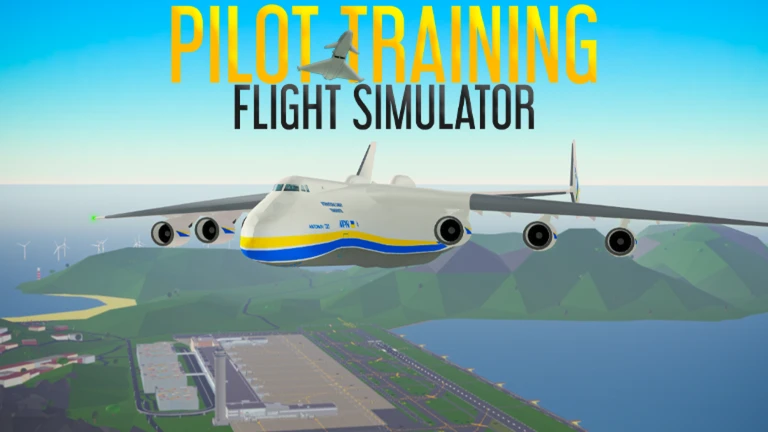
For players who have invested in the Game Pass, the An-225 Mriya offers a different flavor of the pilot training flight simulator space shuttle experience. This aircraft is the largest in the game and features a unique "nose-opening" mechanic for cargo, though the shuttle itself remains mounted on the roof.
Handling the An-225
The An-225 is a beast of burden. With six engines, it has more raw thrust than the 747, but its wingspan is so massive that taxiing becomes a mini-game in itself.
Wing Clearance: When taxiing near shipping containers or hangars, be aware that your wings extend much further than standard jets. Many players accidentally clip their wings before even reaching the runway.
In-Flight Stability: Once in the air, the An-225 feels remarkably stable. The "Soviet version" of the shuttle (the Buran) is modeled with high detail, and players often report that the plane feels less "twitchy" in turbulence compared to the 747.
Feature
Boeing 747 SCA
Antonov An-225
Engine Count
4 Engines
6 Engines
Primary Livery
NASA (USA)
Soviet Union / Aeroflot
Takeoff Speed
~170 Knots
~185 Knots
Maneuverability
Moderate
Low
Visual Obscurity
High (Shuttle blocks top view)
Moderate
Flight Physics: Why the Shuttle Changes Everything
Flying a pilot training flight simulator space shuttle carrier is a lesson in aerodynamics. In the game, the developers have simulated the "heavy" feeling of these specialized missions.
Parasite Drag and Weight
The shuttle acts as a massive "sail" on top of your plane. This creates what pilots call parasite drag. In PTFS, this manifests as a slower acceleration rate. You will notice that reaching cruising altitude takes nearly 30% longer when the shuttle is attached.
The "Butter" Landing Challenge
Landing a shuttle carrier is the ultimate test of a PTFS pilot’s skill. Because the shuttle is so heavy, the plane wants to sink faster during the final approach.
Approach Speed: Maintain a higher-than-normal approach speed (around 150 knots).
The Flare: Start your flare (raising the nose) slightly earlier than you would in a standard 747.
Touchdown: Aim for the "aiming point" markings on the runway. If you land too short, the weight of the shuttle might cause the landing gear to collapse upon impact.
Quick Flight Checklist
Spawn at Gate 22 (Cargo Section) in Greater Rockford.
Select the "Space Shuttle Carrier" variant of the 747 or An-225.
Ensure the runway is clear of smaller aircraft.
Maintain 100% throttle until you reach 2,000 feet.
Use a shallow bank angle (less than 15 degrees) for all turns.
Real-World Context: The Shuttle Training Aircraft (STA)
While PTFS focuses on the large carriers, it is interesting to note how real NASA pilots prepared for these missions. According to historical records, NASA used a Shuttle Training Aircraft (STA), which was a modified Grumman Gulfstream II.
The STA was designed to mimic the Shuttle's unique "flying brick" descent profile. To match the high drag of a falling shuttle, the STA would actually fly with its main landing gear down and engines in reverse thrust while still in the air! While the pilot training flight simulator space shuttle carrier planes in Roblox are meant for transport, the physics of high-drag flight remain a core part of the challenge.
Common Mistakes in Shuttle Transport Missions
Based on player experience within the PTFS community, most "mission failures" occur during the first and last two minutes of the flight.
Impatient Rotation: Trying to lift the nose at 140 knots will almost always result in a stall or a tailstrike. The shuttle is simply too heavy for low-speed flight.
Over-Banking: If you turn too sharply, the lift on the "outer" wing becomes significantly higher than the "inner" wing, but the heavy shuttle on top wants to keep moving straight. This can lead to an unrecoverable roll.
Ignoring the Nose Gear: On the An-225, some players forget to close the cargo nose before takeoff. While the game allows flight with the nose open, it creates massive drag and looks quite unrealistic!
Step-by-Step Spawning Guide
Step
Action
Location/Menu
1
Choose "Greater Rockford" map
Main Menu
2
Travel to the Cargo Area
Airport Ground
3
Interact with Gate 22/Cargo Spawn
Interaction Point
4
Select "747-100" or "An-225"
Aircraft Menu
5
Toggle the "Shuttle Carrier" Livery
Customization Tab
The Future of Aerospace in PTFS
The inclusion of the pilot training flight simulator space shuttle is a testament to the developer's commitment to variety. It bridges the gap between traditional commercial aviation and the high-stakes world of aerospace logistics. As the game continues to update, the community hopes for more "parasite" aircraft missions, perhaps even including the X-15 research plane or modern commercial spacecraft carriers like those used by Virgin Galactic.
For now, mastering the 747 SCA and the An-225 is the peak of heavy-lift achievement. It requires a different mindset—one focused on momentum, patience, and precise throttle control.
Frequently Asked Questions
How do I get the Space Shuttle in Pilot Training Flight Simulator?
To fly the shuttle, you don't actually fly the orbiter itself as a standalone vehicle; instead, you spawn the "Shuttle Carrier" version of the Boeing 747 or the Antonov An-225. Go to the cargo spawning gates at an airport like Greater Rockford, select these heavy-lift planes, and choose the NASA or Soviet shuttle carrier livery.
Is the Antonov An-225 free in PTFS?
No, the Antonov An-225 is typically part of a Game Pass. However, the Boeing 747 Shuttle Carrier Aircraft is often available to all players, allowing everyone to experience the pilot training flight simulator space shuttle update regardless of whether they have spent Robux.
Why is my plane so slow when carrying the shuttle?
The shuttle adds significant weight and aerodynamic drag to the carrier aircraft. This is a deliberate feature of the pilot training flight simulator space shuttle mechanics to simulate real-world physics. You will need more runway to take off and more power to maintain your airspeed during climbs.
Can the Space Shuttle detach from the plane in PTFS?
Currently, in the standard PTFS carrier versions, the shuttle is a static part of the aircraft model's livery/configuration. While players have requested a "separation" mechanic similar to the Enterprise test flights, the current version focuses on the transport aspect of the mission.