Pilot Training Flight Simulator Best Plane: Top Picks Guide
Discover the Pilot Training Flight Simulator best plane for every role. From fast fighter jets to massive airliners, master the Roblox skies with our guide.
Published:
Video Guide
Flying with the PTFS Blue Angels! (Pilot Training Flight Simulator ROBLOX)Table of Contents
Choosing the Pilot Training Flight Simulator best plane depends entirely on your mission, whether you are aiming for high-speed dogfights, realistic commercial long-hauls, or casual island hopping. With over a hundred aircraft modeled after real-world counterparts, Pilot Training Flight Simulator (PTFS) on Roblox offers an expansive sandbox for aviation enthusiasts. Finding the right aircraft can be the difference between a smooth landing at Greater Rockford and a disastrous stall over the ocean.
In this comprehensive guide, we will break down the Pilot Training Flight Simulator best plane options across various categories, including commercial airliners, military jets, and specialized aircraft. We will explore their handling characteristics, speed, and role-play potential to help you dominate the virtual skies. Whether you are a veteran pilot or a newcomer just learning the "E" and "W" keys, understanding the nuances of each airframe is essential for a top-tier flight experience.
Understanding Aircraft Categories in PTFS
Before diving into specific models, it is important to understand how the developer, Pilot Training Club, has organized the fleet. The game features a massive variety of aircraft, ranging from the dawn of aviation to futuristic military prototypes. According to community reports, the "best" plane is often subjective, but performance metrics like maneuverability, stall speed, and takeoff distance provide a clear hierarchy for competitive or realistic play.
The game currently divides its massive roster into several key categories:
Commercial: Massive airliners like the Boeing 747 and Airbus A380.
Military: High-performance jets and bombers such as the F-22 Raptor and A-10 Warthog.
General Aviation: Small, nimble planes like the Cessna 172, perfect for beginners.
Cargo: Heavy lifters like the Antonov An-225 or the BelugaXL.
Classic: Historical icons like the P-51 Mustang or the Wright Brothers' Flyer.
Special: Unique or "meme" aircraft, including the UFO and Santa’s Sled.
Quick Answer: What is the best plane?
For speed and maneuverability, the F-22 Raptor is widely considered the Pilot Training Flight Simulator best plane. For commercial roleplay, the Airbus A380 offers the most prestige, while the Cessna 172 remains the gold standard for learning basic flight mechanics.
Top Commercial Airliners: The Giants of the Sky
Commercial aviation is the heart of the PTFS experience. Players often spend hours flying between major hubs like Tokyo International or Greater Rockford. When selecting a commercial jet, you want a balance of stability, aesthetic appeal, and realistic instrumentation.
The Airbus A380: The King of Long-Haul
The Airbus A380 is often cited as the Pilot Training Flight Simulator best plane for heavy commercial operations. Its sheer size makes it a challenge to land on shorter runways, providing a rewarding experience for skilled pilots. In the game, the A380 features multiple liveries and a detailed model that captures the "Superjumbo" essence.
The Concorde: Speed Meets Elegance
If you want to cross the map in record time while staying in the commercial category, the Concorde is your best bet. It is one of the few commercial planes that can compete with military jets in terms of pure cruising speed. However, its high approach speed makes landings significantly more difficult than a standard Boeing 737.
Aircraft Model
Category
Primary Strength
Difficulty Level
Airbus A380
Commercial
High Capacity / Prestige
Medium
Concorde
Commercial
Supersonic Speed
High
Boeing 747
Commercial
Iconic Design / Stability
Medium
Airbus A350
Commercial
Modern Avionics / Efficiency
Easy
Boeing 787
Commercial
Smooth Handling
Easy
The Best Military Jets for Combat and Maneuvers
For players who prefer adrenaline over autopilot, the military category offers the most responsive flight models. Based on player experience and community dogfight rankings, the following jets stand out.
F-22 Raptor: The Air Superiority King
The F-22 Raptor is frequently voted the Pilot Training Flight Simulator best plane for aerial maneuvers. Its thrust-vectoring capabilities (simulated through high pitch and roll rates) allow it to out-turn almost any other aircraft in the game. It is the go-to choice for players who want to practice advanced aerobatics or engage in mock interceptions.
A-10 Warthog: The Low-Speed Specialist
While the F-22 wins on speed, the A-10 Warthog is a community favorite for its stability at low speeds. It is an excellent platform for "ground attack" roleplay and is surprisingly forgiving during landings on improvised strips.
F-35B: The VTOL Advantage
The F-35B introduces Vertical Take-Off and Landing (VTOL) mechanics, making it a unique contender for the title of the Pilot Training Flight Simulator best plane. The ability to hover and land vertically on aircraft carriers or small helipads gives it utility that traditional jets simply cannot match.
Military Jet
Max Speed
Maneuverability
Special Feature
F-22 Raptor
Very High
Elite
Stealth Design
F-35B
High
High
VTOL / Hover
A-10 Warthog
Low
Medium
High Durability Feel
Su-57
High
High
Supermaneuverability
F-14 Tomcat
High
Medium
Swing-wing Mechanics
General Aviation: The Best Planes for Beginners
If you are new to the official Pilot Training Flight Simulator on Roblox, jumping straight into a Boeing 777 might be overwhelming. General Aviation (GA) planes are designed to teach you the fundamentals of the flight envelope.
Cessna 172 Skyhawk
The Cessna 172 is the quintessential trainer. It has a very low stall speed, meaning you can fly slowly without falling out of the sky. For a beginner, this is the Pilot Training Flight Simulator best plane because it allows you to focus on the UI and controls without the complexity of jet engines or complex flap settings.
Extra 300s
Once you have mastered the Cessna, the Extra 300s is the best transition into aerobatics. It is incredibly light and responsive, allowing for rolls and loops that would rip the wings off a larger aircraft. It is a favorite for community-organized airshows.
Cargo and Heavy Lifters: Moving the World
Cargo operations in PTFS provide a different kind of challenge. These planes are heavy, slow to respond, and require careful throttle management during takeoff and landing.
Antonov An-225 Mriya
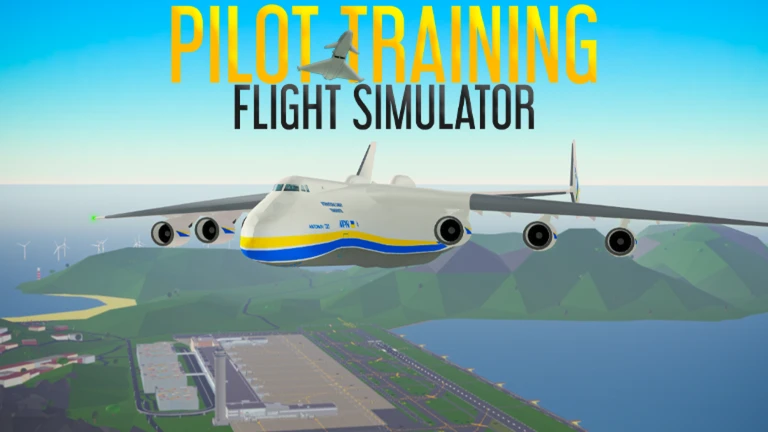
The An-225 is a beast of an aircraft. As the largest cargo plane in the game, it requires a significant amount of runway to get airborne. Players who enjoy the "heavy" feel of aviation often consider this the Pilot Training Flight Simulator best plane for logistics roleplay.
Airbus BelugaXL
The BelugaXL is not just a cargo plane; it is a visual marvel. Its unique "whale" shape makes it a standout at any airport. While it doesn't have the speed of a jet, its high-lift wings make it surprisingly stable during the initial climb.
Cargo Aircraft
Engine Type
Landing Challenge
Best Used For
Antonov An-225
6x Jet
Very High
Long-distance Cargo
BelugaXL
2x Jet
Medium
Oversized Loads RP
C-17 Globemaster
4x Jet
Medium
Military Logistics
Boeing 747-8F
4x Jet
Medium
Global Freight
Mastering the Controls: How to Fly Your Best Plane
Choosing the right plane is only half the battle; you must also know how to operate it. The game uses a standardized control scheme that is easy to learn but difficult to master.
Engine Start (E): Always the first step. Listen for the spool-up sound before applying throttle.
Throttle (W/S): Use 'W' to increase and 'S' to decrease. For most takeoffs, 100% throttle is required. For landing, aim for 20-30% depending on the aircraft's weight.
Landing Gear (G): Don't forget to retract your gear after takeoff to reduce drag. Conversely, ensure it is down before you touch the tarmac, or you will experience a "belly landing."
Flaps (F/V): Use flaps to increase lift at lower speeds. This is crucial for heavy planes like the A380 during the approach phase.
Camera (C): Switch between first-person (cockpit) and third-person views to better judge your altitude and alignment with the runway.
Pro Landing Tip
When flying the Pilot Training Flight Simulator best plane of your choice, always monitor your airspeed. If your nose starts to wobble or dip involuntarily, you are approaching a stall. Increase throttle immediately and level your wings.
Community Insights: Formation Flying and Groups
A significant part of the PTFS experience involves the community. Groups like the "PTFS Blue Angels" (as seen in community videos) demonstrate the high level of skill achievable in the game. These players often use the Hawk T1 or F/A-18 Super Hornet for precision formation flying.
According to player experience, joining a group can help you learn advanced techniques such as:
Delta Formations: Flying in a V-shape with other pilots.
Synchronized Rolls: Performing maneuvers in unison.
ATC Interaction: Communicating with player-controlled Air Traffic Control for a realistic experience.
Flying with a group often changes your perspective on what the Pilot Training Flight Simulator best plane is. In a group setting, a plane with smoke trails (like the Extra 300s or Hawk T1) becomes much more valuable than a fast stealth jet.
Common Pitfalls to Avoid
Even with the best aircraft, mistakes happen. Community reports highlight a few common errors that new pilots make:
Over-speeding the Flaps: Deploying flaps while flying at max speed can cause control issues. Only use them when slowing down for landing.
Ignoring the Runway Heading: Many players try to land "sideways" across a runway. Always align your nose with the center line at least a mile out.
Forgetting Pushback (P): If you spawn at a gate, use the 'P' key to push back safely before starting your engines and taxiing.
Final Verdict: Which One Should You Choose?
There is no single "best" plane that suits every player, but we can categorize the winners based on specific goals:
For Speed Junkies: The SR-71 Blackbird or F-22 Raptor.
For Roleplayers: The Airbus A380 or Boeing 747.
For Precision Pilots: The Hawk T1 or Extra 300s.
For Beginners: The Cessna 172.
Ultimately, the Pilot Training Flight Simulator best plane is the one that makes you feel like a real pilot. Experiment with different categories, explore the various islands, and don't be afraid to crash a few times while finding your favorite airframe.
FAQ: Pilot Training Flight Simulator Best Plane
What is the fastest plane in Pilot Training Flight Simulator?
The SR-71 Blackbird is widely regarded as the fastest aircraft in the game, capable of reaching speeds that far exceed standard commercial and even most military jets. However, it requires a lot of space to turn, making it less ideal for tight maneuvers.
How do I unlock new planes in PTFS?
Most planes in PTFS are free and available to all players from the spawn menu. However, some specialized or "premium" aircraft may require a Gamepass (bought with Robux). Always check the aircraft selection menu to see which ones are currently available to you.
Which plane is the easiest to land for a beginner?
The Cessna 172 is the easiest plane to land because of its slow approach speed and stable flight characteristics. If you are looking for a jet, the A-10 Warthog is also surprisingly easy to land due to its straight-wing design which provides excellent lift at low speeds.
Is there a "best" plane for dogfighting?
While PTFS is primarily a flight simulator and not a combat game, for mock dogfights, the F-22 Raptor is considered the Pilot Training Flight Simulator best plane. Its ability to maintain control at high angles of attack gives it a significant advantage in turning battles against older jets like the F-4 Phantom or Mig-15.