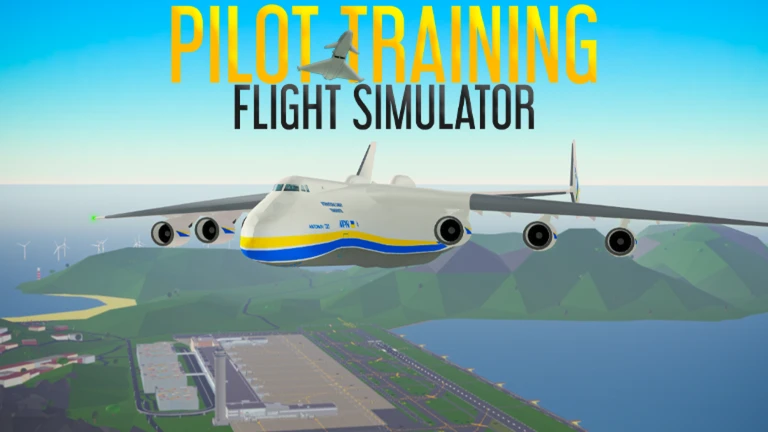
Complete Guide to Pilot Training Flight Simulator Airports
Explore all Pilot Training Flight Simulator airports with our guide. Learn about spawn rules, military bases, and landing tips for every Roblox PTFS location.
Published:
Table of Contents
Whether you are a seasoned captain or a student pilot just starting your journey, mastering the vast network of pilot training flight simulator airports is essential for a professional flying experience. In the expansive world of Roblox’s premier aviation sim, your choice of departure and arrival points dictates the type of aircraft you can operate and the technical challenges you will face. Navigating the diverse landscape of pilot training flight simulator airports requires an understanding of runway lengths, spawn restrictions, and regional geography to ensure every flight ends in a successful landing rather than a reset.
Quick Answer
Pilot Training Flight Simulator (PTFS) features over 40 distinct landing locations, ranging from massive international hubs like Perth and Tokyo to treacherous short-strip airfields like Lukla. Crucially, aircraft spawning is restricted by airport size: large airliners (A380/747) require International Airports, while Military Bases are reserved for combat and transport craft, prohibiting civilian airliners entirely.
Understanding Airport Classifications in PTFS
The map in Pilot Training Flight Simulator is categorized into specific zones that dictate gameplay flow. Not all runways are created equal; a pilot attempting to land a Boeing 747 at a small island strip will quickly find themselves overshooting the tarmac. According to community reports and developer updates from the Pilot Training Club, the game utilizes a tiered system for its landing zones.
International Airports
These are the crown jewels of the PTFS map. They feature multiple long runways, extensive taxiway networks, and large gates. Most importantly, these are the only locations where "Super" class aircraft, such as the Airbus A380 or the Boeing 747-8, can be spawned. They often serve as the primary hubs for players engaging in Roleplay (RP) with Air Traffic Control (ATC).
Regional and Small Airfields
These airports serve smaller islands or inland towns. While they are perfect for turboprops like the ATR-72 or small private jets like the Cessna Citation, they lack the runway length for heavy long-haulers. Spawning a large jet here is usually blocked by the game engine to prevent physics glitches on short runways.
Military Bases and Aircraft Carriers
Military installations like McConnell AFB or the HMS Queen Elizabeth carrier operate under a different set of rules. As noted in the official game wiki, military bases cannot spawn airliners or standard cargo aircraft. These zones are dedicated to fighters, bombers, and multi-role military helicopters.
Airport Type
Spawning Capabilities
Best Aircraft Type
International
All Aircraft (including A380/747)
Long-haul Airliners, Heavy Cargo
Regional
Small/Medium Jets, Turboprops
Commuter Planes, Private Jets
Military Base
Fighters, Bombers, Military Transport
F-35, B-2, C-17 Globemaster
Coast Guard
Helicopters, Small STOL Planes
Search and Rescue (SAR) Craft
Carrier
Naval Jets, VTOL
F-14, Harrier, F-35B
Deep Dive into Major International Hubs
When exploring pilot training flight simulator airports, players frequently congregate at a few high-traffic locations. These hubs are the backbone of the game's multiplayer environment.
Perth International Airport
Perth is often considered the "main" airport by the community. It features a layout that facilitates high-volume traffic, making it the preferred spot for ATC-led events. Its long parallel runways allow for simultaneous departures and arrivals, provided the pilots are coordinated.
Why fly here: It offers the most complete "airline pilot" experience, with detailed terminals and plenty of gates.
Pro Tip: When approaching Perth, ensure you check the active runway via the ATC frequency to avoid head-on collisions with departing traffic.
Tokyo International Airport
Tokyo is a fan favorite due to its aesthetic design and strategic location on the map. It serves as a gateway to the northern reaches of the PTFS world. Like Perth, it supports the largest aircraft in the game.
Navigation Challenge: The approach to Tokyo involves navigating around nearby mountain ranges, requiring a steady descent rate to align with the PAPI lights correctly.
Greater Rockford Airport
Rockford is a massive logistical hub. It is frequently used for cargo operations and large-scale flight training exercises. Because of its central location, it acts as a bridge between the smaller island chains and the main continental landmasses.
Airport Name
Runway Length
Difficulty
Primary Use
Perth International
Very Long
Easy
Commercial RP, Heavy Jets
Tokyo International
Very Long
Medium
Long-haul, Scenic Arrivals
Greater Rockford
Long
Easy
Cargo, Flight Training
Larnaca Airport
Medium-Long
Easy
Regional Hub
Specialized and Challenging Landing Zones
For pilots who find standard runways boring, the list of pilot training flight simulator airports includes several high-difficulty locations that test your mastery of flaps, airbrakes, and throttle control.
Lukla (The World's Most Dangerous)
Based on the real-world Tenzing-Hillary Airport, Lukla in PTFS is a nightmare for inexperienced pilots. The runway is incredibly short and built on a steep incline. There is no room for a "go-around" here; once you are on final approach, you must commit to the landing or risk crashing into the mountainside.
Barra Airport (Beach Landings)
Barra is unique because the "runway" is actually a sandy beach. Landing here requires careful attention to your altitude, as the lack of traditional runway markings can lead to spatial disorientation. It is best suited for rugged aircraft like the Twin Otter.
HMS Queen Elizabeth and USS Gerald R. Ford
Landing on a moving aircraft carrier is the ultimate test for military pilots. You must master the "carrier break" maneuver and ensure your hook catches the arrestor wires (or use VTOL for the F-35B).
Mastering Short Fields
When landing at small pilot training flight simulator airports like Lukla or Saba, always use full flaps and maintain a speed just slightly above your stall speed. Aim for the very beginning of the runway ("the numbers") to maximize your stopping distance.
Complete List of Current and Legacy Airports
The PTFS map has evolved significantly over the years. Some airports have been revamped, while others remain as "Legacy" versions for nostalgic or performance reasons. According to player experience, exploring the legacy versions can be a great way to practice without the lag often found at the busier, updated hubs.
Active Airfields and Bases
The following are currently active and popular destinations for players:
Airbase Garry: A primary military hub for land-based operations.
Keflavik Airport: A cold-weather hub perfect for simulating transatlantic stops.
McConnell AFB: The go-to location for refueling tankers and heavy bombers.
Saint Barthélemy (St. Barts): Famous for its low approach over a public road.
Saba: Home to the shortest commercial runway in the world.
Coast Guard and Sea Bases
For pilots who prefer the water, PTFS offers specialized maritime locations:
Grindavik Coast Guard: Specialized in SAR missions.
Tavaro Seabase: A dedicated spot for seaplanes like the Catalina or the Icon A5.
Oil Rig: A tiny helipad located in the middle of the ocean, providing a significant challenge for rotary-wing pilots.
How to Navigate Between Airports Effectively
With so many pilot training flight simulator airports to choose from, navigating the skies can be daunting. The game provides several tools to help you reach your destination safely.
Using the In-Game Map
The "M" key (or the map icon on mobile) opens a full-screen display of all islands and airports. You can click on an airport to see its name and set a waypoint. A blue marker will appear on your HUD, showing you the direction and distance to the selected airfield.
ATC and Communication
In "ATC 24" servers or high-RP environments, you cannot simply land wherever you want. You must communicate your intentions.
Tune to the Frequency: Each major airport has a dedicated radio channel.
Request Inbound: Inform the controller of your position and request landing clearance.
Follow Instructions: The ATC will provide a runway assignment and a "pattern" to follow (e.g., "Enter left downwind for runway 09").
Common Pilot Errors to Avoid
Spawning too large: Trying to spawn a Boeing 777 at a Coast Guard base will result in a "Too Large" error message.
Ignoring Wind/Direction: Always try to land into the wind (though wind physics in PTFS are simplified, it is good practice for realism).
Wrong Altitude: Approaching a small airfield like Mellor at 10,000 feet will make a safe landing impossible. Start your descent at least 15-20 miles out.
Step
Action
Why it Matters
1
Select Destination
Sets your navigation HUD and plan.
2
Check Aircraft Size
Ensures the destination airport can handle your plane.
3
Monitor Fuel
Some long-haul flights across the PTFS map can actually drain your tank.
4
Contact ATC
Prevents mid-air collisions in busy airspace.
5
Configure for Landing
Flaps and gear must be down well before the runway threshold.
The Future of PTFS Locations
The developer, Pilot Training Club, consistently updates the game with new islands and revamped versions of older airports. Community discussions on Discord and Fandom suggest that more "international" style hubs are in development to spread the player load away from Perth.
If you want to stay updated on the latest additions to the Roblox Pilot Training Flight Simulator map, checking the official game page and the "Change Log" section in-game is the best way to see which runways have been lengthened or which new islands have been discovered.
Griefing and Trolling
Some players may attempt to block runways at popular pilot training flight simulator airports. If you encounter a blocked runway, use the "Report" feature or switch to a less crowded airfield like Izolirani or Paphos to continue your flight undisturbed.
Frequently Asked Questions
Which airport in PTFS can spawn the Boeing 747 or Airbus A380?
Only International-class pilot training flight simulator airports can spawn these "Super" aircraft. The most common locations for this are Perth International, Tokyo International, and Greater Rockford Airport. If you are at a smaller regional airfield, these planes will not appear in your spawn menu.
How do I find the military bases in Pilot Training Flight Simulator?
Military bases like McConnell AFB and Airbase Garry are located on specific islands marked with a shield or star icon on the in-game map. Remember that you cannot spawn civilian airliners at these locations; they are strictly for military-grade aircraft and support vehicles.
Can I land a seaplane at any airport?
While you can land a seaplane on a traditional runway (provided you don't lower the floats/gear incorrectly), they are designed for water landings. The best pilot training flight simulator airports for these are the Tavaro Seabase or the various Coast Guard stations located near the shorelines of the major islands.
Why is the runway at Lukla so difficult to land on?
Lukla is considered one of the hardest pilot training flight simulator airports because of its short, uphill runway and the surrounding mountainous terrain. There is no flat ground for a traditional approach, meaning pilots must manage their airspeed perfectly to touch down at the start of the incline, which helps the plane slow down quickly.