
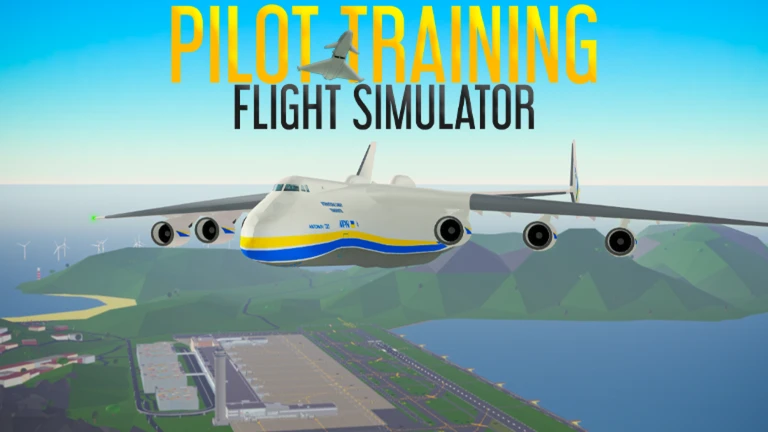
Flying in the virtual skies of Roblox has never felt more immersive than in Pilot Training Flight Simulator (PTFS). If you have ever wondered how a real pilot navigates complex flight paths or manages different airframes, this guide is your flight manual to success. Whether you are a casual explorer or an aspiring aviation enthusiast, mastering the controls is the first step toward becoming a true master of the clouds.
Table of Contents
Why This Simulator Stands Out for Realism
Unlike many casual Roblox experiences, PTFS offers a depth that appeals to those seeking a authentic simulation experience. With over 96 aircraft available—ranging from the massive Antonov AN-225 to the nimble Piper Cub—the diversity of flight mechanics is staggering. Understanding the nuances of each plane is what separates a novice from a seasoned aviator.
By treating the game with the mindset of a real pilot, you elevate your roleplay and technical proficiency. It is not just about takeoff and landing; it is about managing your altitude, understanding the airport maps, and learning the communication protocols that keep the virtual skies organized.
Getting Started: The Basic Flight Mechanics
To fly like a real pilot, you must first master the fundamentals of aircraft handling. PTFS provides a free-roam environment, meaning you create your own objectives. Before you head to the busy skies, take time in a secluded area to familiarize yourself with the response time of different aircraft types.
Essential Flight Controls
| Control Action | Key/Method | Purpose |
|---|---|---|
| Engine Start | E | Initialize aircraft systems |
| Throttle Up/Down | W / S | Control vertical lift and speed |
| Pitch Control | Mouse Movement | Adjust nose up/down for altitude |
| Banking | A / D | Execute turns and navigation |
| Landing Gear | G | Manage drag and ground contact |
According to community reports, the most common mistake for beginners is over-correcting during landing approaches. A real pilot relies on steady, incremental adjustments rather than jerky mouse movements. Always anticipate your descent profile well before you reach the runway threshold.
Aircraft Categorization and Selection
With such a massive hangar, picking the right plane can be overwhelming. Some aircraft are built for speed, while others, like the airliners, require a disciplined approach to flight paths and passenger comfort.
Top Aircraft Categories
| Category | Recommended Aircraft | Best For... |
|---|---|---|
| Heavy Airliners | Boeing 747, Airbus A380 | Long-haul routes and realism |
| Military Jets | F-22 Raptor, SR-71 Blackbird | Speed and aerial maneuvers |
| General Aviation | Cessna 172, Piper Cub | Learning basic handling |
| Cargo/Specialty | Antonov AN-225, C-130 | Heavy lift and formation flights |
Practice consistent takeoffs Always check your flaps configuration before takeoff. Using the correct flap setting based on your aircraft weight is a hallmark of a professional pilot in PTFS.
Mastering ATC and Community Communication
Communication is the lifeline of any controlled airspace. Even in a casual-oriented simulator, utilizing Air Traffic Control (ATC) commands properly creates a more professional atmosphere. Community members often emphasize that using clear, concise language improves the flow of traffic at popular hubs like the Greater Rockford Airport.
Standard ATC Interaction Steps
- Request Clearance: Always check if an ATC controller is active before taxiing.
- Taxiing: Stay on the designated taxiways and yield to larger aircraft.
- Alignment: Line up your aircraft at the runway holding point.
- Communication: Use the built-in command system to signal your intentions, such as "Request takeoff, heading North."
Navigating the Map and Secret Locations
One of the most rewarding aspects of PTFS is the massive, sprawling map. Beyond the airports, there are hidden gems and landmarks scattered across the islands. Exploration is a core part of the experience, and many players spend hours simply "spotting" rare vehicles or finding hidden areas.
Notable Landmarks for Explorers
| Landmark | Difficulty to Find | Why Visit? |
|---|---|---|
| Find the Monkey | Moderate | A classic hidden community easter egg |
| Secret Lab | Hard | Offers a unique environment for roleplay |
| Oil Rig | Easy | Excellent destination for helicopter practice |
| Crashed Fighter | Moderate | Great for cinematic photography |
Advanced Flight Strategies
To truly fly like a real pilot, you should delve into "Formation Flights" and "Altitude-based Max Speed" management. Recent updates have introduced more complex flight physics, making speed control at high altitudes more critical than ever.
If you are flying a jet like the F-15E Strike Eagle, you must monitor your fuel levels and speed indicators. Flying too fast at low altitudes can lead to instability, while high-altitude stalls occur if you push your climb rate too aggressively. Experience shows that professional players spend 60% of their time monitoring instruments and 40% actually maneuvering the craft.
[!SUMMARY] Flight Checklist for Success
- Pre-flight: Check your livery and aircraft specs.
- Taxi: Always yield to landing traffic.
- Takeoff: Maintain a steady climb rate.
- Cruise: Use navigation markers to stay on your flight path.
- Approach: Slow down early to ensure a stable landing.
FAQ: Becoming a Pilot Training Flight Simulator Pro
Q: How do I improve my landing accuracy in the game? A: Practice consistent speed reduction. A real pilot in PTFS targets a specific approach speed based on the aircraft type—too fast and you will overrun the runway; too slow and you risk stalling before the threshold.
Q: Are there specific aircraft I should buy first? A: Start with the default planes to learn the mechanics, then move to the Cessna 172 for stability. Once comfortable, look into gamepasses or specific category unlocks that suit your preferred flying style, whether it be military jets or heavy cargo transport.
Q: Where can I find the most updated information on aircraft stats? A: While the game receives frequent updates (like the recent DC-10 or Console Support patches), the best place for current data is the official PTFS community wiki, which details livery lists, badge requirements, and recent change logs.
Q: How do I participate in community events? A: Keep an eye on the Pilot Training Club's group page. They frequently host events ranging from formation flights to airport takeovers, which is a great way to socialize and refine your skills in a controlled environment.
Sources and known gaps
- Pilot Training Flight Simulator Wiki - Fandom Source accessed:
- Pilot Training Flight Simulator Source accessed: